johndoe@gmail.com
 Facebook
Are you sure you want to reset the form?
Your mail has been sent successfully
Are you sure you want to remove the alert?
Your session is about to expire! You will be signed out in
Do you wish to stay signed in?
By Jill Collis and Hannu Ojala
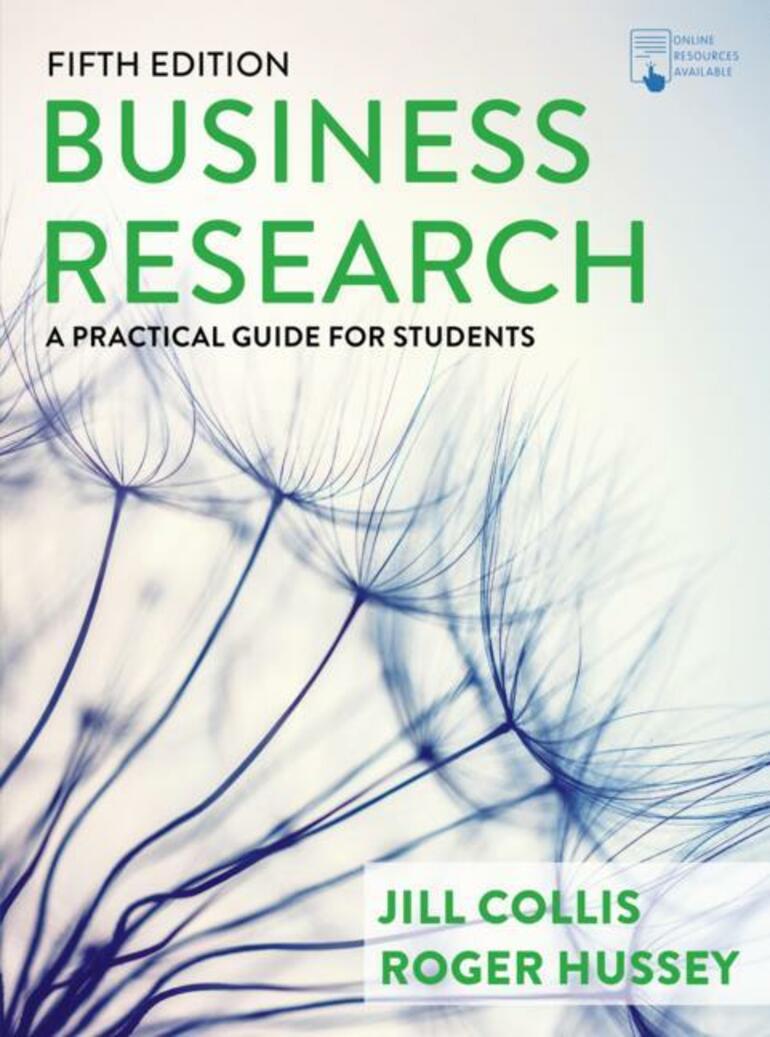
1. Your book, Business Research, is praised for its sympathetic approach to the study of research methods. Are first time researchers at the forefront of your mind when writing?
The original idea for the book came when I was a doctoral student working on my research proposal. I found the textbooks available at that time were very impressive but somewhat daunting. I felt I needed a level of knowledge and experience to understand them that as a new researcher simply I simply didn’t have. That made me determined to write a really accessible and practical book that would appeal to new and established researchers alike.
2. Was this a key reason for choosing to write this book?
Yes, that was my reason for writing the book and it was easy to motivate my co-author, Roger Hussey, as he had just been invited to set up a research methods training programme for doctoral students. So we were able to test the material used in the first edition on those students. Since then, I have established my own academic career and the development of the book has been led by both of our experiences of teaching research methods to undergraduate, Master’s and doctoral students in the UK and abroad.
3. You have a motto for students ‘Eat, sleep, work, repeat’ based on the Fatboy Slim song Eat, Sleep, Rave, Repeat, which will strongly resonate with all students undertaking a research project. Does your understanding of teaching research methods to undergraduate, Master’s and doctoral students make you an empathetic textbook writer?
Well, that’s the mantra I tell my MBA and Master’s students to adopt because their programmes are so intensive. They need to grasp the key concepts and move on to choosing a topic and designing their research very quickly. This also applies to undergraduate students, who are often tempted to put off planning their research until the last minute. Although you might think that it wouldn’t apply to doctoral students, because they have several years in which to complete their research, it does because the quality and quantity of their research is so much greater.
4. What key piece of advice would you give to a student using Business Research?
Many thanks for choosing our book, but don’t forget to read it! We’ve designed the book so that it can be read independently or used as the basis of a research methods programme. We’ve written it in a way that follows each stage in the process that you will go through, so start at the beginning and read at least one chapter a week until you reach the end. Each chapter is clearly structured around a particular topic and we have tried to explain the different aspects in a simple way. As many first-time researchers find the language of research off-putting, we introduce terms gradually, and provide key definitions in the margin and activities at the end of each chapter for experiential learning. We suggest you use the glossary and index at the back of the book to help you locate specific information and guidance once you start your research. The final chapter is for students who are beginning to panic because they’re running out of time. We have deliberately kept the book small enough to carry around as a constant source of reference!
5. What are the main problems students encounter when tasked with a research project?
For some students, the main problem is choosing a topic. Students on taught programmes should be guided by what is relevant to their degree programme, what interests them and what will enhance their job prospects. Doctoral students should be guided by their research interests and finding a topic that allows them to make a contribution to knowledge.
Many students find academic writing a challenge, especially if they are required to write in a language that is not their mother tongue. In the book we explain how to avoid plagiarism by using the Harvard system of referencing, and how to structure the sections in a research proposal and a research report (usually called a dissertation or thesis). In addition to the advice in the book, students will be able to seek feedback from their supervisor and take advantage of any writing and referencing workshops provided.
For other students, the main problem is managing the project. The solution is careful planning and subsequent monitoring of progress against the plan. Tips are offered in the book, together with advice on how to make the most of meetings with the supervisor. Students on taught courses often need to complete their research within a relatively short period of time. Consequently, they have to balance the conceptual demands of the subject with pressing practical considerations. In contrast, doctoral students generally have more time, but need to develop greater knowledge of the conceptual aspects of research.
A major problem for all students is how to find the most efficient and effective way of collecting, analysing and presenting their data while maintaining academic rigour. For this reason, we cite a range of studies that illustrate the methods covered in this book. The studies we mention were chosen for their richness, clarity and variety of approach rather than because they are classic studies, so students should find them very useful.
6. What are the key research skills that you believe students should take with them to the work environment?
There’s no doubt that academic research provides a number of transferrable skills that enhance a student’s future employability. These include the ability to conduct a rigorous and ethical investigation of a business problem or issue using accepted research methods. Students will have developed skills in project management, administration, negotiation and IT, in addition to enhancing their written and spoken language skills. As far as personal qualities are concerned, it is likely that students will project greater self-confidence and demonstrate higher levels of creativity, perseverance and independence.
7. What would you do with your spare time if you weren’t writing textbooks?
Perhaps I’d be writing novels!
8. What treats get you through writing that last chapter?
The excitement and satisfaction of knowing that I’m about to complete a project is enough to spur me on, but I have to admit that a couple of squares of very dark chocolate with my afternoon tea goes down a treat!
9. You took a career break to raise a family, what are your views on women in education?
Women have still not achieved equality with men in higher education. According to the latest statistics from HESA, only 28% of professors in the UK were female in 2019/20, which is a mere 1% increase year on year since 2013/14. At that time, an article in the Independent (20 February 2014, p. 10) reported that leading academics at Cambridge University were calling for changes in the way academic success is measured. Unfortunately, little progress has been made and in 2020/21 success is still based on the number and quality of academic publications, and the frequency and size of research grants, both of which benefit men more than women.
In my view, there is also inequality for both men and women who choose academia as a second career after working in business or professional practice compared with those who have spent their entire working lives as academics. This is because many Business Schools and Schools of Management have no way of measuring how such previous experience can enrich the quality of teaching and academic research.
10. You seem to be particularly talented at writing textbooks, what is your least able practice?
Remembering the names of all my students!