johndoe@gmail.com
 Facebook
Are you sure you want to reset the form?
Your mail has been sent successfully
Are you sure you want to remove the alert?
Your session is about to expire! You will be signed out in
Do you wish to stay signed in?
The late Ottoman world is the immediate background to the modern Middle East that emerged after the First World War. Any serious discussion of contemporary Middle Eastern issues and conflicts, such as the Kurdish question and Israel-Palestine, must take this into account. There is therefore no need to insist on the importance of a handbook on this time and space.
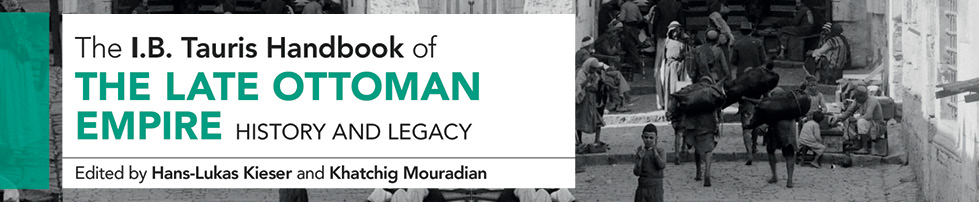
The study of the late Ottoman Empire has witnessed a boom over the past three decades, commensurate with the flourishing of Ottoman studies in general.[1] This phenomenon has gone hand in hand with the central role that the contemporary Middle East has played in post-Cold War global politics. At the same time, a resurgent nostalgia that, in the words of Selim Deringil, “glorifies and distorts” the empire’s history and legacies in the region has reverberated across cultural, religious and political arenas (see Chapter 32). And, while the phrase “late Ottoman” appears in the titles of dozens of recent monographs and countless articles, there is no volume that outlines, takes stock of, and reflects on the state, shape, and trajectory of late Ottoman studies. This alone evinces the need for the present work for both the field’s insiders and a broader readership. Working over the course of four years with a diverse team of fifty experts in the field, we have produced the current volume: the first ever handbook on late Ottoman history and its legacy.
Digital access to archives and increased ease of global scholarly communication in the age of the internet decisively facilitated the advances in the field—and the making of this volume. The digital age has also allowed transnational networks to function efficiently at little cost—a boon for disciplines where small groups of specialists work in different countries across continents. In our field, both the increased number of experts and new forms of collaboration have fostered much richer approaches compared to the earlier, very fragmentary scholarship on the late Ottoman era and the end of the empire. This introduction presents our vision and guiding principles for this tome, and maps out its constitutive elements and supporting content. We first discuss the resurgent relevance of late Ottoman themes and the importance of the late Ottoman legacy in contemporary geopolitical and cultural dynamics. We then explain our approach to the subject, pointing to distinctive features of the handbook and offering an overview of its structure and contents. Each section of this volume begins with a brief introduction where we delve deeper into some of the themes addressed here, and the afterword offers an in-depth overview of the field and situates the contributions to this volume within that frame.
We use the term “late Ottoman” in reference to the final period in the history of the Ottoman Empire, during which a profound internal and international precariousness emerged: This manifested itself in the military defeat against Russia, dominator of the Black Sea since 1774, and the short-lived French invasion of Egypt and Syria at the end of the eighteenth century. In this same period, Sultan Selim III attempted an internal “new order” (nizam-i cedid), resulting in two turbulent decades that ended with his assassination (1789–1808). Thus, the “late Ottoman Empire,” as we understand it in this handbook, extends from the late eighteenth century to the empire’s dissolution after the First World War at the Lausanne Conference. This overlaps with what international diplomacy called the Question d’Orient, the question of the future of the late Ottoman world. The aftermath of the latter is enduring, and its legacy is formative for Turkey and the contemporary Middle East—as this handbook makes clear especially in Sections VI and VII. Defining the legacy of the late Ottoman period—and covering it meaningfully—is no less of a challenge. Echoes of the period under study pulsate across the modern Middle East and permeate large swaths of social and political life in dozens of states and communities. The last two sections of this volume identify and trace key areas in this space, and offer case studies that shed light on the century since the dissolution of the Empire, with particular focus on the Republic of Turkey and the Levant.
The Dynamic of the Field
Pervasive turmoil in the contemporary Middle East—notably in regions that had remained Ottoman until the end of the Empire (such as Anatolia, Iraq, Syria, Lebanon, and Palestine)—has invited a thorough interrogation of the Middle East’s Ottoman past. Key drivers of the boom in the study of late Ottoman history—scholarly curiosity, the search for new paths forward and for solutions to intractable conflicts after the end of the Cold War—are all strongly correlated with the field’s verve, and are reflected in this handbook. A broader and far more diverse scholarly landscape has fostered new perspectives foregrounding gender, subaltern voices, the environment, and rethinking violence and its sequelae.
The late Ottoman era had long remained under-researched because post-Ottoman societies, especially their state elites, had sweepingly negative associations with it and with Ottoman rule in general. The Kemalists, the heirs of the Ottoman Empire, sought to maintain maximal distance between the “new Turkey” and its Ottoman predecessors. As such, the critical reappraisal of the late Ottoman era during the last three decades has produced a well-justified scholarly reevaluation on the one hand, and an ideological exploitation of the era by a new, post-Kemalist politics of “neo-Ottomanism” in Ankara on the other.
At the turn of the twenty-first century, scholarship on the late Ottoman Empire still suffered from significant lacunae. Very few historians at Western universities were able to read Ottoman-Turkish and the other languages of the Ottoman world; crucial sources were not yet accessible, while other archives were just opening up. While unfettered access to sources and freedom of research remain unattained, fundamental progress has been made. The most striking research gap concerned the last Ottoman decade (early 1910s to early 1920s) characterized by the Young Turk party-state, the Ottoman Great War, and genocide.[2] This observation leads to Turkey-specific reasons for our field’s dynamic. After the signing of the Treaty of Lausanne, which liquidated the Ottoman Empire, the latter’s cataclysmic collapse cascaded through the rest of the twentieth century. By negotiating a compromise between mandatory powers—France in Syria, Britain in Palestine and Iraq—and an ultranationalist new government in Ankara, the diplomatic settlement in Lausanne in 1923 brought Turkey back into the Western orbit in both political and civilizational terms. However, it sacrificed democracy as well as self-determination for the other peoples of the former Ottoman space. Thus, important issues remained unaddressed and unresolved. Appeasing Ankara and pulling it away from the rising Soviet Union was a primary goal of the ageing national empires of Britain and France at Lausanne’s negotiating table. The United States followed a similar course of action a few years later.
The restarting point at Lausanne in 1923 therefore induced a massive condoning of, if not identification with, Turkish-nationalist tenets and taboos, and the renouncement of robust, independent scholarship on the end of the Ottoman Empire. More broadly, the Lausanne Conference perpetuated a framing of history convenient to the major dealmakers. For decades, crucial topics—including religious war, demographic engineering, genocide, and seminal anti-democratic choices—remained behind an enduring veil of silence or sanitizing euphemisms. Western authors followed the narrative of Kemalist modernization, although generally not without some resigned lament for what had gone fatally wrong or was lost with the “death of the Ottoman world.”[3] According to the Kemalist “bible,” Atatürk’s 1927 Speech (Nutuk), resurgence was achieved after precarious late Ottoman weakness and a decade of existential wars. Inaugurating an auspicious “hour zero” of Turkish history, victory crowned Turkey’s War of Independence after the First World War’s defeat and an outstanding diplomatic success in Lausanne. The Lausanne Treaty thus acknowledged this rising “new Turkey.”[4]
Ottoman Nostalgia versus Historical Clarification and Justice
The end of the Cold War contributed to breaking this silence and fueling new explorations of history, admittedly in ambivalent ways. On the one hand, we see nostalgia for the Ottoman Empire and the sultanate-caliphate, especially among practicing Sunni Muslims in Turkey who had, for decades, felt the disdain of, and sometimes outright hostility from, Kemalist elites. On the other hand, we witness the struggle of those heavily disfranchised by the Lausanne Conference, stripped not only of political agency, but also of their homes, belongings, and habitats after having lost to genocide a major part of their community members. The latter are the non-Muslim groups in Anatolia—primarily the Armenians, Assyrians, Rum (native Greek-Orthodox Christians)—and the Kurds. Their “longing for home” in national history predates the rise of Ottoman rule and Turkish settlement in the regions they called home, which unitary Turkish nationalism absorbed after 1923.[5] Their experience of loss at the end of the empire had little to do with nostalgia for a romanticized Ottoman past or imperial grandeur.
In its original meaning, “nostalgia” points to a “homecoming” to a “healing future,” rather than a glorified past. The seventeenth century medical neologism “nostalgia” expresses the intense and sickening but unfulfilled “pain” (algos) to “return home” (nostos): an illness that could only be healed by way of homecoming.[6] The Lausanne Conference favored unitary rule by the Turkish nationalists and authoritarian rule in general. It dismissed any form of an “Armenian home” in a corner of Anatolia (even as a Turkish-governed province), and thus “healing by homecoming” for genocide survivors. The “national home” for Jews in Palestine, in contrast, endured in the post-Great War peace architecture, which positively responded to a millennia-old, national and eschatological longing for “Zion.” Neither of these two post-Lausanne paths has so far led to comprehensive and democratic social contracts in the post-Ottoman space that would satisfy the yearnings for equality and democracy that became tangible and explicit after the Young Turk Revolution of 1908.
There are many highly relevant historical themes and figures that scholarship had manifestly not done justice to by the end of the twentieth century. Ottoman studies now started to integrate a much broader spectrum of suppressed or sidelined voices, languages, and experiences. In-depth research, reckoning with history, and the expectation of new-old horizons—a promising “homecoming to the future”—went hand in hand. Those most clearly let down at the Lausanne Conference knew that they needed to come to terms with a past that for them had never been past during the entire twentieth century. Their persisting desire and efforts for historical rectification and justice at long last found more fertile scholarly ground at various universities. However, the pain of loss and unrealized (national) homes and hopes at the end of the Ottoman Empire remains a common denominator of all groups who drove the new research dynamic. Nostalgia involved in the early twenty-first century’s “late Ottoman boom” thus ranges from the lasting pain of lost homes to imperial-caliphal nostalgia; from the longing for Ottoman conviviality and cosmopolitism, to the urge to revisit missed opportunities and going “back forward” to squandered democratic coexistence.
A contemporary human geography marked by hate and violence on the one hand and unfulfilled promises on the other has compellingly paved the way for historical exploration. In its most frequent metaphorical uses in the humanities, “nostalgia” designates a longing for a past, the memory and legacy of which impact specific groups. This comprises the politically exploitable longing for mythicized worlds like the Napoleonic Empire, a racially segregated America, or a Russian Empire including Ukraine. Along similar lines, the sultanate-caliphate nostalgia denotes a powerful yearning to return to the late Ottoman Empire and era of Sultan Abdülhamid II. Starting with the post-Lausanne abolition of the Ottoman caliphate, millions of Muslims have been emotionally invested in this nostalgia for a strong Islamic Turkey that stands in support of Muslims worldwide. For more critical spirits, notably Palestinian Arab authors, this nostalgia was about the reappraisal of a world in which the Middle East was more integrated than it is now; where inhabitants had the opportunity to petition or connect with a center—Istanbul—that represented the region as a whole. Since the late twentieth century, scholarship on Palestine, Israel, and Zionism has also had to thoroughly reappraise the late Ottoman background of the century-old conflict, going beyond entrenched national historiographies. Palestinian scholars as well as “new historians” in Israel and international experts contributed to scholarly progress on this prominent topic, although without much success in inspiring politics that overcomes polarizations and stalemate.
In Turkey, the promises of neo-Ottoman grandeur under a sultan-caliph-like leader have facilitated the autocratic transformation, since the 2010s, to a state-sponsored, nonscientific reframing of late Ottoman history.[7] This regressive development has rolled back the in-country transformations in historical research achieved when Ankara gravitated towards the European Union in the first decade of the twenty-first century and researchers in and from Turkey started to collaborate in our field with scholars worldwide, forming new and productive networks, notably in North America and Europe.
Novel Approaches
The developments of political history in a broad sense—everything that concerns functioning or dysfunctional polities—takes center stage in this handbook. While making an effort to reflect dynamics among diverse constituencies empire-wide, the volume privileges topics of impact on the late and post-Ottoman world as a whole. Some constitute the focus of an entire chapter, while others are tackled in a number of chapters and short essays throughout. The section introductions as well as the companion website www.bloomsburyonlineresources.com/the-i-b-tauris-handbook-of-the-late-ottoman-empire address some key gaps that nevertheless remain.
As a scholarly endeavor which must pass the test of time and reflect ongoing research, the handbook carefully takes stock of recent developments in and around the field of late Ottoman studies. A few issues remain highly controversial, if not among scholars, then at least in political and public discourses in and on the post-Ottoman space. In addition to presenting the state of the field, this handbook strives to offer cutting-edge scholarship, and critical and crisp historical accounts on the leitmotifs it tackles, often from multiple perspectives. It is committed to academic freedom and responsibility as antidotes to the misuse of history by anti-democratic forces.
In contrast to most existing presentations of the late Ottoman Empire and Ottoman ethno-religious coexistence, this handbook integrates the meticulous recent research on the violent end of the empire’s “plural society.”[8] Ascribing to the nineteenth century, a period of constitutional reforms, the importance it deserves, the handbook elaborates on the context and deeper reasons for the haunting Ottoman cataclysm of the 1910s and early 1920s. It also explores the legacies both of this cataclysm and of the unfulfilled late Ottoman promise, including frustrated constitutionality and self-determination after the end of Empire. However, as a handbook, its approach is much broader than that of recent monographs on the end or “fall of the Ottomans” which also integrate the latest research on this period.[9]
Explicit in chapter titles or implicit in the chapters’ content and scope, the novel approaches in this handbook pertain to the history of violence, gender, memory studies, international law and international relations, and a close look at the post-Great War treaties. The handbook also sheds light on topics that are well-researched, but which receive little attention in surveys of the Ottoman Empire that heavily rely on the imperial center. Among these are muhajirs (Muslim migrants or refugees), Western missionaries, identitarian politics, slavery, and demographic engineering. In the same vein, we also draw from adjacent fields such as Armenian studies, Kurdish studies, and Greek Studies as we sketch the contours of late Ottoman and post-Ottoman dynamics, offering a coherent focus on the Kurdish question, as well as the Armenians and other non-Sunni populations and the concept of “post-genocide societies” in Turkey, Syria, and Lebanon. Ottoman studies is far less siloed than it was two decades ago, and we strive to demonstrate the dynamic links among fields.
The Anatomy of the Handbook
Seven roughly chronological sections guide the readers of this handbook from the late eighteenth to the early twenty-first centuries. While interconnected and cross-referenced, each of the thirty-four chapters stands on its own and can be read separately, as do the eight supplementary Interventions (short essays). For brief summaries of the chapters as well as their contextualization and additional insights, we invite the reader to consult the section introductions.
The first two sections deal with the Ottoman Empire before the 1908 Young Turk Revolution. Section III addresses diachronic topics from Arab and Kurdish nationalism to missionaries and Zionism. Sections IV and V treat the post-1908 period marked by the emergence of the Young Turks as a critical force (more precisely by the predominant organization among the Young Turk opposition: the Committee of Union and Progress), the First World War, and mass violence. Section VI is on the post-Great War treaty system with its defining and lasting impact on the Middle East. And, finally, section VII addresses post-Ottoman realities that have remained entangled with the late Ottoman legacy. The volume is further enriched by two bibliographies (a general bibliography at the end of the volume and also one on gender in late Ottoman and Turkish Studies in Section IV), a chronology of late Ottoman political events, and an incisive Afterword on the state of the field.
This handbook is neither an encyclopedia nor a dictionary that strives for completeness of events, groups, and historical figures, but rather a work of scholars who take stock of and reflect on late Ottoman and post-Ottoman studies. Nevertheless, it has the ambition to be as comprehensive as possible. For this reason, we have included short essays that aim to offer the state of the art in subfields and thus complement the main chapters. Section I on “Late Ottoman Coexistence: Reforms and Transformations in a Premodern Empire” provides a broad picture of the Ottoman nineteenth century, focusing on incisive but ultimately failing imperial reform efforts in the center and the provinces. Research on all aspects of this section has greatly advanced over the last thirty years. The section pays particular attention to how the “functioning” of hierarchical Ottoman “plural society” [10] reacted to, and was affected by, globalization, imperialism, and proclaimed egalitarian constitutional reconfiguration. However, the imperial elite’s attempts to strengthen the state prevailed against designs of constitutional rule. Transformations in and within the relations of the Jewish, Rum, and Armenian communities of the Ottoman world reflect with clarity the complex changes during the nineteenth century. Throughout the handbook, we have also been guided by the conviction that changes regarding traditionally unrecognized “heterodox,” or otherwise comparatively small groups such as the Alevis, Yazidis, Druze, and Assyrians, who became more visible internationally in the mid-nineteenth century, also deserve attention in the puzzle of late Ottoman reconfiguration. With examples such as transforming swamps into farmland and overcoming malaria, the Intervention in this section offers a glimpse of how environmental issues intersected with social and political ones in the late Ottoman world.
Section II on “Crises, Violence, and Revolutionism” deals with the massive signs of dysfunction of the late nineteenth century. The signs included war and country-wide chaos, influx of muhajirs, revolutionary currents, slavery that under foreign pressure gradually disappeared but was not abolished, and Sultan Abdülhamid’s autocracy that fashioned a sense of order and grandeur for Muslims, all the while allowing for societal mass violence against Armenians. Serious research has manifestly progressed in recent years on this latter topic, which had been traditionally neglected in surveys of the Empire’s history despite its centrality for the understanding of Hamidian society. This Section also offers a thorough investigation of the prominent role of the Balkans and of the changes in the Ottoman Army that became the main power basis for the 1908 revolution. Section III on “Nationalism, Transnational Actors, and International Relations” treats, diachronically, important non-state drivers of late Ottoman change. A more comprehensive and nuanced scholarly understanding on most of these themes has, again, been achieved only recently. They include Western Christian missions, Kurdish and Arab nationalism, Zionism, and emigration from the Ottoman Empire.
Section IV on “The Constitutional Era: From the Ottoman Spring to Party Dictatorship” and Section V on “Wars and Genocide” also integrate a great deal of recent research, including on women’s history. A signature feature of traditional presentations has been the failure to confront head on the devastating experience of mass violence and genocide at the end of Empire. Sections IV and V explore the CUP, the Balkan Wars, the explosive emergence of Turkish-Muslim nationalism fused with Islamism, the First World War, genocide, Palestine, the dispossession of Anatolia’s Christians, the Anatolia wars, and Kemal Atatürk, the rising dictatorial star of the post-Ottoman Turkish nation-state. Recent scholarly achievements also include Arab and post-Zionist Jewish explorations of late Ottoman Palestine as well as the modern history of the Kizilbash-Alevis.
Section VI on “Treaties and Their Defining Impact” contends with the transformative role of the post-Great War settlements intended to bring about global peace. When it came to the Ottoman world, they evolved from a Paris-Geneva peace project, based on the central pillar of the new League of Nations but corrupted by imperialist compromises, to a “Near East Peace” of Lausanne that abandoned the League’s political project, limiting itself to dealmaking between new post-Ottoman potentates and Western imperialists plagued by Europe’s deep crisis. Thus were the futures of the peoples in the post-Ottoman world decided for generations, and seeds of conflict buried in fertile soil. This outcome immediately impacted the people in mandated territories, Kurds who were made “borderlanders,” and Armenians deprived of their homes or condemned to live in unrepentant post-genocidal societies. The Treaty of Lausanne made possible a “nationalist internationalism” that embraced anti-democratic actors of strategic or economic interest, as long as they basically conformed to the West’s new diplomatic framework.
Section VII on “The Quest for Belonging in the Post-Ottoman Space” follows seamlessly from the previous. It reckons with contention and protest in Turkey, focuses on Arab and Kurdish reckoning with the Ottoman past, and further delves into Armenian survival, resistance, and reconstruction far from former homes. It explores the radical politics of identity and memory and the loss of last pockets of liberal internationalism, as well as a long history of protest against anti-democracy in Turkey. The Afterword, finally, on “Historiography’s History,” reflects on how the late Ottoman Empire and its legacy have hitherto been narrated and presented, and how fundamentally this academic field has been renewed since the late twentieth century.
Notes
1 Comprehensive historical dictionaries at the cutting-edge of current research include F. Georgeon, Nicolas Vatin, and G. Veinstein (eds.), Dictionnaire de l’Empire ottoman, 2 vols. (Paris: CNRS Editions, 2015). See also Selçuk A. Somel, Historical Dictionary of the Ottoman Empire (Lanham, MD: The Scarecrow Press, 2012).
2 The only recent English-language monograph on the late Ottoman Empire, while meritorious in many respects, shies away from unpacking the most sensitive aspects of the last Ottoman decade, even though there was already relevant recent research on extreme violence and its perpetrators. See
M. Şükrü Hanioğlu, A Brief History of the Late Ottoman Empire (Princeton, NJ: Princeton University Press, 2008).
3 See, e.g., the 1989 French handbook of Ottoman history: Robert Mantran (ed.), Histoire de l’Empire Ottoman (Paris: Fayard, 1989). For the modernizing narrative prevailing in the West, see one of the most used textbooks in the second half of the twentieth century: Bernard Lewis, The Emergence of Modern Turkey (London: Oxford University Press, 1961).
4 Mustafa Kemal Atatürk, The Speech (Nutuk) English Edition (Cromwell CT: Ataturk Research
Center, 2020), first published in Turkish in 1927.
5 For Armenian longing for ancestral hometowns and lost homes, see, for example, Carel Bertram, A House in the Homeland: Armenian Pilgrimages to Places of Ancestral Memory (Standford, CA: Stanford University Press, 2022).
6 Coined in the late seventeenth century by the Swiss Johannes Hofer, an Alemannic-speaking medical student in Basel, this neologism translates the compositum Heim-Weh: a complex of emotions
that Hofer and his peers perceived as the cause for a debilitating illness. “Home” meant for them the familiar worlds of families, villages, towns, and valleys from which his cases—mostly Swiss children, maids, students, and mercenaries—hailed. In the latter’s life-preserving return home, no
grandeur was involved: it was about restoring people to a healing lifeworld they were familiar with or whose idealized image they carried with them. See Johannes Hofer, Dissertatio curioso-medica, de nostalgia: vulgo: Heimwehe oder Heimsehnsucht (Basileae: Typis Jacobi Bertschii, 1688), 16, https://www.e-rara.ch/bau_1/doi/10.3931/e-rara-18924.
7 A new study on Turkish nostalgia rightly insists on the predominant Turkish-Muslim longing for imperial grandeur and a leader of the stature of Abdülhamid II, while also mentioning a nostalgia for Ottoman cosmopolitism among intellectuals and authors like Orhan Pamuk and Elif Shafak. In both cases, the longing for “home” is characterized by images of the (late) Ottoman past. See
Mehmet Hakan Yavuz, Nostalgia for the Empire: The Politics of Neo-Ottomanism (Oxford: Oxford University Press, 2020). Yavuz’s Sunni-centered approach ignores the anti-Christian genocides by the Young Turks and the lasting non-Muslim nostalgia for lost homes and futures at the end of the Ottoman Empire.
8 See, for example, Mantran, Histoire de l’Empire ottoman; Hanioğlu, Late Ottoman Empire; Benjamin Braude and Bernard Lewis, Christians and Jews in the Ottoman Empire: The Functioning of a Plural Society (New York: Holmes & Meier Publishers, 1982); Caroline Finkel, Osman’s Dream (New York: Basic, 2005). An exception is Hamit Bozarslan, Histoire de la Turquie: De l’Empire à nos jours (Paris: Tallandier, 2013).
9 Ryan Gingeras, Fall of the Sultanate: The Great War and the End of the Ottoman Empire, 1908–1922 (Oxford: Oxford University Press, 2016); Sean McMeekin, The Ottoman Endgame: War, Revolution, and the Making of the Modern Middle East, 1908–1923 (New York: Penguin Press, 2015); Eugene L. Rogan, The Fall of the Ottomans: the Great War in the Middle East, 1914–1920 (London: Penguin Books, 2016).
10 As appreciatively termed in Benjamin Braude and Bernard Lewis (eds.), Christians and Jews in the Ottoman Empire: The Functioning of a Plural Society (New York: Holmes & Meier Publishers, 1982), 2 vols.